One of the biggest misconceptions in precious metals investing is that gold and silver should always be treated the same way.
According to the Ainslie discussion, timing matters far more with silver than it does with gold.
Gold is generally viewed as a long-term wealth protection asset. The argument is that there is rarely a “bad” time to accumulate gold because its primary role is preserving purchasing power, hedging inflation and protecting against financial instability.
Silver is different. Silver tends to move in much larger cycles and can experience far more volatility. That creates both greater risk and potentially greater upside.
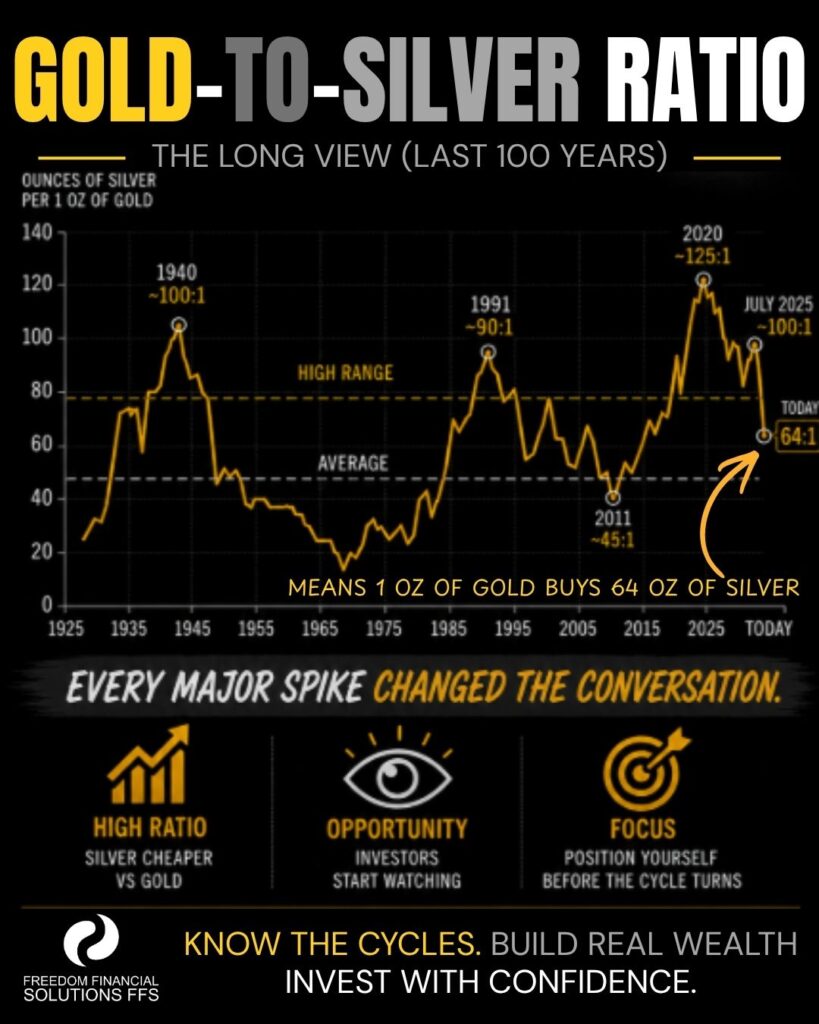
Ainslie’s key timing indicator is the Gold-to-Silver Ratio (GSR).
When the GSR is high — particularly above 50 — silver is viewed as relatively undervalued compared to gold. According to their framework, these periods can present stronger opportunities to accumulate silver.
The opposite is also true. When silver rallies strongly and the GSR falls sharply, that may become a better time to reduce silver exposure or even convert silver back into gold. In simple terms:
- high GSR = silver becomes more attractive
- low GSR = gold becomes more attractive
The discussion also highlighted the importance of buying during quieter market periods rather than chasing price spikes.
Historically, many investors only become interested in silver after prices have already surged. But according to Ainslie’s approach, the better opportunities often appear during pullbacks, consolidations and periods when silver is temporarily out of favour.
Their broader view is that:
- gold is the long-term “insurance” asset
- silver is the higher-volatility growth opportunity within precious metals
That means investors may treat them differently depending on their goals and time horizon.
- Someone focused on long-term stability may prioritise gold accumulation consistently over time.
- Someone willing to accept more volatility for potentially larger gains may look for periods where silver appears historically cheap relative to gold.
The key point is not trying to perfectly predict prices.
It’s understanding that gold and silver behave differently throughout market cycles — and that timing tends to matter much more with silver than with gold.
At FFS, we believe the “self” part of an SMSF is about taking the time to learn, understand and actively engage with your investments.
The more you understand how different asset classes behave — whether it’s property, gold, silver or shares — the better positioned you are to make informed long-term decisions and grow your wealth with confidence.
That’s why FFS exists: to empower Australians through education so you can take greater control of your financial future.