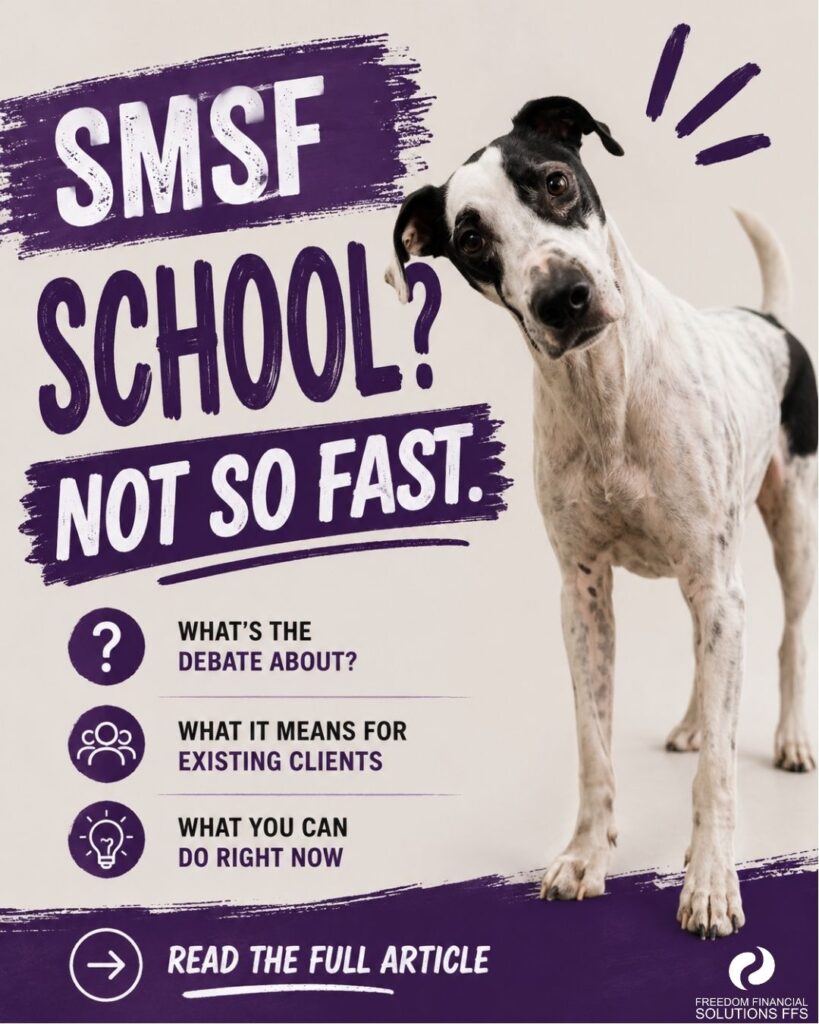
Earlier this week, we wrote about the Federal Government’s proposed new rules for SMSFs, including mandatory education for people wanting to establish a new self-managed super fund.
Now the SMSF industry is starting to respond, and while there is broad support for better trustee education, there is already some debate about exactly how it should work.
Education? Yes. One size fits all? Maybe not.
The SMSF Association has come out against mandatory “one size fits all” education for every new SMSF trustee. Importantly, it isn’t arguing against education itself. It supports improving trustee knowledge, but questions whether every person establishing an SMSF should be required to go through exactly the same mandatory process.
It’s a fair question.
Someone who knows very little about super, investing or trustee responsibilities may benefit enormously from some education before becoming responsible for an SMSF. But should exactly the same requirements apply to someone who already has considerable experience with SMSFs, superannuation, investing or business structures?
That is where the detail will matter.
There shouldn’t be much argument about the fact that SMSF trustees need to know what they’re getting into. Running an SMSF comes with responsibilities and, while accountants, administrators and other professionals can help, the trustees remain responsible for ensuring the fund complies with the rules.
That doesn’t mean every trustee needs to become a superannuation expert. It does mean they should understand their basic responsibilities, understand the decisions being made with their fund and know when they need professional help.
The challenge is finding a way to improve that knowledge without creating unnecessary barriers for people for whom an SMSF may be appropriate.
What does this mean for existing FFS clients?
For our existing SMSF clients, there is nothing you need to do right now simply because these reforms have been announced. There is no new course you suddenly need to complete and no new form sitting in your inbox waiting to ruin your Friday afternoon.
The Government has announced its proposed direction, but much of the detail still needs to be worked through. We’ll be watching that closely and, if the final changes affect the way your SMSF needs to be administered, documented or operated, we’ll explain what has changed and what you need to do.
In the meantime, it’s business as usual. Understand what your fund owns, keep good records, review your investment strategy when required and ask questions when you’re unsure.
Education has always been part of the FFS approach. Our aim is to empower Australians to take control of their financial energy, and understanding your super is an important part of that. It’s why we publish articles that explain SMSF and super rules in plain English and why we have always held Q&A sessions where people can simply turn up and ask questions.
A reminder for our clients: our regular Q&A sessions are free to attend (just check our website for dates/times/links). If there’s something about your SMSF you don’t understand, a rule you keep hearing about, or you just want to learn more about how it all works, come along. You don’t even need to have a question. You’re welcome to join us and listen to what other people are asking.
We’d much rather you ask than sit at home wondering. Keep an eye on our News & Events page and emails for upcoming Q&A dates.
Thinking about setting up an SMSF?
If you’re considering an SMSF, you don’t need to wait for the Government to decide what mandatory education might eventually look like. You can start educating yourself now.
Find out what an SMSF actually is, what being a trustee involves, what it costs to establish and run, and what the ongoing administration and compliance responsibilities are. Learn about the investment restrictions and the rules around putting money into super and, eventually, taking it out.
And ask questions. Lots of them.
Be particularly cautious if someone tells you that you need an SMSF to make more money, pressures you to move your super quickly, or approaches you with an investment opportunity that requires you to establish an SMSF first. Recent events have given us plenty of reminders about why understanding where your super is going matters.
An SMSF can be appropriate for some people and not for others. Whether it is appropriate for you depends on your individual circumstances. If you need a recommendation about whether you should establish an SMSF, that crosses into personal financial advice and should come from an appropriately licensed financial adviser.
But you certainly don’t need personal advice just to start learning. There is plenty of general information available to help you understand how SMSFs work, what trustees are responsible for and what questions you should be asking before making any decisions.
So, where to from here?
The proposed reforms go well beyond trustee education. They also include changes involving investment strategies, SMSF bank accounts and rollovers, as well as proposed additional powers for the ATO to intervene in certain rollovers where there are concerns about fraud, financial abuse, misconduct or potential harm.
We covered those proposals in more detail earlier this week. What’s interesting now is watching the industry respond and seeing where the final rules eventually land.
Protecting people from scams and misconduct matters. Making sure people understand the responsibilities they are taking on matters too. But so does getting the balance right.
We’ll keep following the reforms as they develop and, most importantly, let our clients know when there is actually something they need to do.
Missed our earlier article? Read New Super Rules Are Coming: What They Could Mean for SMSFs for an overview of the Government’s proposed changes.
Important: This article contains general information only. It does not take into account your objectives, financial situation or needs and should not be relied upon as a recommendation to establish an SMSF. Whether an SMSF is appropriate depends on your individual circumstances. Consider obtaining advice from an appropriately licensed financial adviser before making a decision about your superannuation.