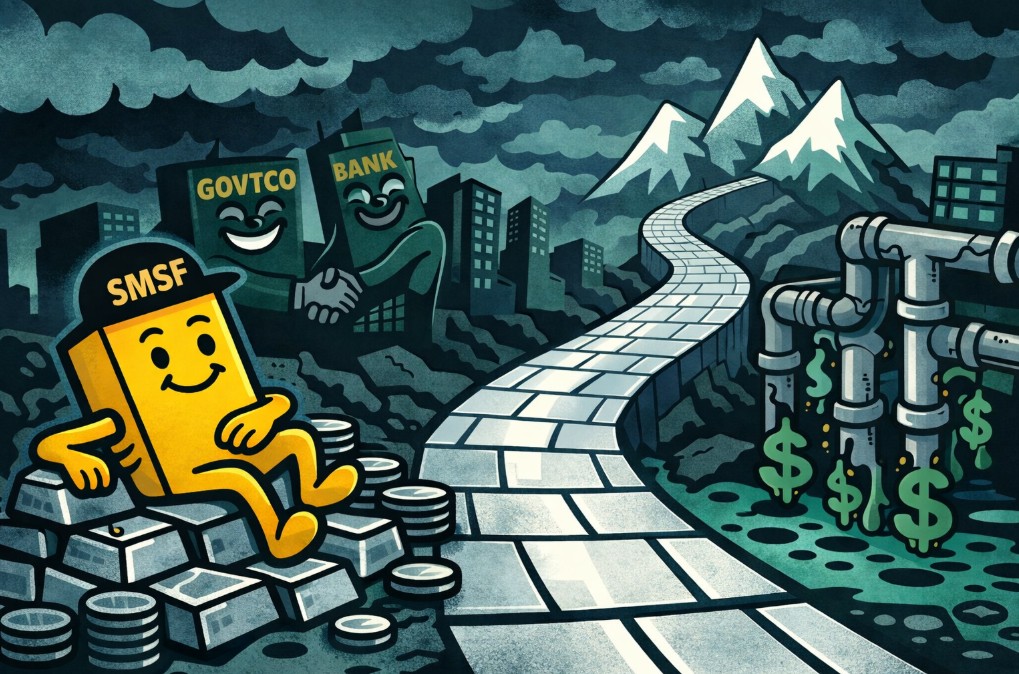
Most people think silver going up is just another market move.
It isn’t.
What we’re seeing right now is not about chart patterns, speculation, or clever traders drawing lines on graphs. It’s about trust breaking down, supply tightening, and paper promises being questioned.
Let me explain it simply.
First: The Financial Plumbing Is Under Stress
There’s something called the repo market in the United States. You’ll never hear about it on the nightly news, but it’s basically the overnight cash system for big banks.
Banks lend to each other using government bonds as security. When everything is healthy, this just ticks along quietly.
When it doesn’t? The US Federal Reserve has to step in and provide emergency liquidity.
That tells us one thing: banks don’t fully trust each other.
This doesn’t mean the system collapses tomorrow. But it does mean confidence is fragile — and when confidence weakens, people start looking for things that don’t rely on promises.
That’s where gold and silver come back into the picture.
Second: The Silver Market Isn’t a Normal Market
In most industries, if you sell something, you have to actually own it.
Silver doesn’t work like that.
The global price of silver is mostly set in paper markets, not by people buying physical bars. The two main places this happens are:
- the London Bullion Market Association
- the COMEX
In these markets, many more ounces of silver are sold on paper than physically exist.
That doesn’t mean “crime” in the movie sense — but it does mean leverage, opacity, and rules that would never be allowed in property, accounting, or financial advice here in Australia.
For decades, this system kept prices low and orderly.
Now it’s under strain.
Third: Physical Silver Is Getting Harder to Find
Silver isn’t just jewellery. It’s essential for:
- solar panels
- electric vehicles
- electronics
- data centres
Demand is rising — and mining supply hasn’t kept up.
At the same time, some producing countries have had disruptions and regulatory changes. Whether political or practical, the result is the same: less silver coming to market.
When demand goes up and supply tightens, price pressure builds.
That’s basic economics.
Fourth: East and West Are No Longer Agreeing on Price
One of the most important signals right now is this:
- Silver is trading meaningfully higher in Asia than it is in London or New York.
- That gap tells us something critical.
- Asia trades physical metal.
The West trades paper contracts.
When physical buyers are willing to pay more than the paper price, it means the paper price is no longer telling the full truth.
That’s not opinion — that’s market reality.
Fifth: Big Banks, Big Positions — and Big Assumptions
There’s a lot of talk about which banks hold what positions in silver.
It is publicly known that large banks — including JP Morgan — have historically held significant silver inventories and traded heavily in derivatives.
What’s important is not blaming one bank or another. What matters is this:
- the market is highly concentrated
- leverage is extreme and
- if confidence cracks, moves become violent
That’s why technical chart patterns have failed lately. When real supply matters, drawings on screens stop working.
So What Does This Mean for an Everyday Aussie?
It means a few simple things:
- Silver’s rise isn’t random or just speculation
- It’s being driven by real demand, tight supply, and systemic stress
- Paper markets are being questioned for the first time in a long time
- Physical assets don’t rely on trust — and trust is what’s in short supply.
This doesn’t mean “sell everything and panic”.
It means understand the system you’re in.
Because when markets stop behaving “normally”, it’s usually not the charts that were wrong — it’s the assumptions we didn’t realise we were relying on.
Final Thought
Silver isn’t just a metal right now. It’s a signal. A signal about:
- trust
- leverage
- supply chains and
- how fragile modern financial systems really are.
Whether you ever buy an ounce or not, understanding why this is happening puts you miles ahead of most people.
Stay grounded. Stay curious. And don’t confuse calm explanation with complacency.
Personal observation
I’ll finish with a personal observation — not advice, just my perspective after decades working inside the financial system.
More and more people are asking questions about where their superannuation sits, how it’s invested, and how much control they really have over it.
For some, that curiosity naturally leads to conversations about Self-Managed Super Funds (SMSFs).
An SMSF doesn’t magically make someone wealthier, and it’s certainly not for everyone. It comes with responsibility, compliance, and the need to actually engage with your decisions rather than outsourcing them entirely.
But what it does offer is choice.
Choice over:
- what assets you hold
- whether part of your retirement savings sit outside purely paper-based markets
and - how exposed you are to leverage, counterparties, and complex financial plumbing
For some people, that includes allocating a portion of their superannuation to physical assets like gold or silver, held within the superannuation environment.
Not as a bet. Not as a get-rich-quick play. But as a diversification away from pure promises.
Again — this is not financial advice. It’s simply my opinion, based on experience and observation.
Every person’s circumstances are different. What’s appropriate depends on your goals, your risk tolerance, your time horizon, and your willingness to be involved in decision-making.
This commentary is shared for existing clients only, as part of broader education around financial sovereignty, structure, and long-term thinking.
If nothing else, my hope is that it encourages better questions — not rushed decisions.
Because sovereignty doesn’t start with action. It starts with understanding.
— Cass