This is an extract from our book Gold (and Silver) in your SMSF: Ownership Must Knows. Download the complete book here.
When is gold real?
Before assessing permitted forms of gold investment, it’s important to distinguish between real gold and paper gold.
Real gold refers to physical bullion that is owned outright and redeemable — typically in the form of bars or coins. Paper gold includes exchange-traded funds (ETFs), certificates, and gold-backed securities where the investor does not have direct title or redemption rights.
If you don’t hold the gold directly, and redemption rights do not apply, the investment is not treated as physical bullion. Here’s what you need to know about available forms of gold investment.
1. Shares in gold mining companies
Some people confuse investing in a gold mining company with investing in gold. However, these are fundamentally different exposures. Mining
shares are equities—ownership in companies that explore, extract, and sell gold. Their value depends not just on gold prices, but also on exploration
success, operational costs, management decisions, and broader market sentiment. For SMSFs, they can add growth potential, but also
introduce significant equuity risk and volatility. Unlike physical bullion or gold ETFs, mining shares are not a direct store of value or hedge.
Mining shares cannot be redeemed for physical bullion by SMSFs or retail investors — the investment is in the company, not in the gold it produces.
2. Gold ETFs
SMSFs may invest in ASX-listed exchange-traded funds (ETFs) such as ASX:GOLD that track the gold price. These investments are treated as
listed securities under the Income Tax Assessment Act 1997, not physical bullion under the SIS Regulations. Retail investors cannot redeem the physical gold, and ETF units are not considered direct bullion holdings. The ETF must be consistent with the fund’s investment strategy and
should be treated for compliance purposes like any other listed security.
ETF units cannot be redeemed for physical bullion by SMSFs or retail investors, as redemption rights (if any) are generally reserved for institutional market makers.
3. Bullion purchased from dealers
An SMSF may acquire physical gold directly from a dealer or broker, provided the asset is delivered into trustee-controlled secure storage. Acceptable storage includes private vaults (eg Reserve Vault, Melbourne Vault, Perth Mint) or any secure facility under the trustee’s control. The bullion must be fully documented and must not be used personally. Accepted evidence includes:
- dealer invoice in the SMSF’s name
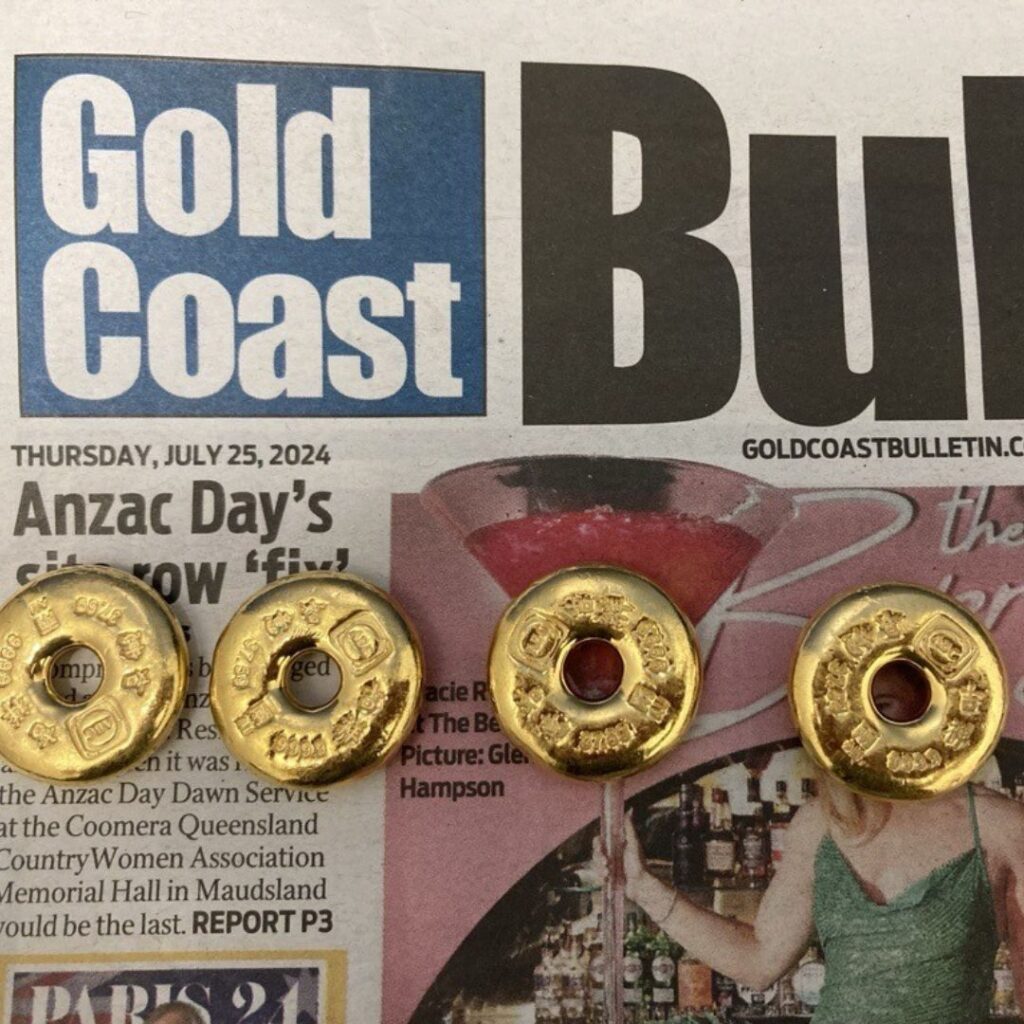
- An annual dated photographic record (eg photo or video with the gold laid out on a daily newspaper clearly showing the date just after 1 July each year – see example below)
- An annual vault statement or storage agreement
This bullion is already held in physical form and is inherently redeemable at the trustee’s discretion, provided it remains under the SMSF’s control and
is properly disclosed.
4. Allocated bullion
Vllocated bullion refers to specific gold bars or coins stored in a secure, third-party vault such as the Perth Mint or Ainslie Bullion, and registered
in the name of the SMSF. Each bar or coin can be individually identified by serial number, weight and purity. This structure represents a direct holding of physical bullion and provides the strongest compliance position under the SIS Act and GS009.
Allocated bullion is fully redeemable, and the trustee may request physical delivery at any time, subject to secure storage, proper documentation and sole
purpose compliance.
5. Unallocated bullion
Unallocated bullion entitles the SMSF to a share of a larger gold pool without specific bar allocation. This is a permissible investment if the arrangement is with a reputable provider such as the Perth Mint or Ainslie Bullion, and ownership is clearly documented in the name of the SMSF. Trustees must ensure compliance with the sole purpose test and that the investment strategy supports pooled metal holdings.
Redemption is typically possible by converting pooled units into allocated
bars, subject to fees and minimum quantity thresholds set by the provider.
6. Gold and silver standard tokens
Some providers, such as Ainslie Bullion, offer digital tokens (e.g. AUS and AGS) backed 1:1 by physical gold or silver held in secure storage. These tokens represent legal title to allocated or pooled bullion and may be redeemed for physical metal, subject to terms. To meet SIS compliance, the SMSF must ensure that tokens are registered in the name of the fund, supported by proper legal documentation, and stored in a manner that meets sole purpose, control, and audit requirements under GS 009. These tokens are not listed securities, so care must be taIen to treat them as physical holdings and not financial instruments.
Redemption is permitted but may be subject to minimum withdrawal sizes, fabrication fees, and secure collection or delivery terms. Without enforceable redemption rights or legal title held by the fund, the tokens may be treated as paper gold.
7. Depository accounts
Depository accounts represent government-guaranteed or institution-backed gold holdings where the Mint or provider stores and insures bullion on behalf of the SMSF. The account must be held in the name of the fund, and all statements and documentation must support SMSF ownership. This bullion may be redeemed into physical metal depending on the type of depository account, the provider’s terms, and the trustee’s compliance with SIS and GS 009 documentation requirements.
Redemption is permitted under most contracts, although minimum withdrawal sizes, fabrication charges and secure delivery conditions will apply.