This is an extract from our book Gold (and Silver) in your SMSF: Ownership Must Knows. Download the complete book here.
Bullion: what shape and size to buy?
Once you’ve decided to invest in physical gold (or silver) through your SMSF, the next step is choosing what format to buy. At first glance, it might seem like a matter of personal taste but the size, shape, and type of bullion you choose can affect your upfront cost, resale value, portability, and storage and insurance requirements.
When considering investing your super in bullion, you also need to think about a few things: how long are you planning on holding it for, are you likely to need to liquidate some of it and if so, how often and in what quantities? For example, will you need to sell a little each year to help meet minimum pension payments?
So should you buy bars, coins, or rounds? And should you go big, or keep it small?
Let’s look at some key considerations.
First, a word on weight
Bullion is measured in troy ounces, which are slightly heavier than the standard ounces used for everyday goods. One troy ounce equals 31.1035 grams. For simplicity, we’ll use the term ‘ounce’ throughout this article to refer to troy ounces.
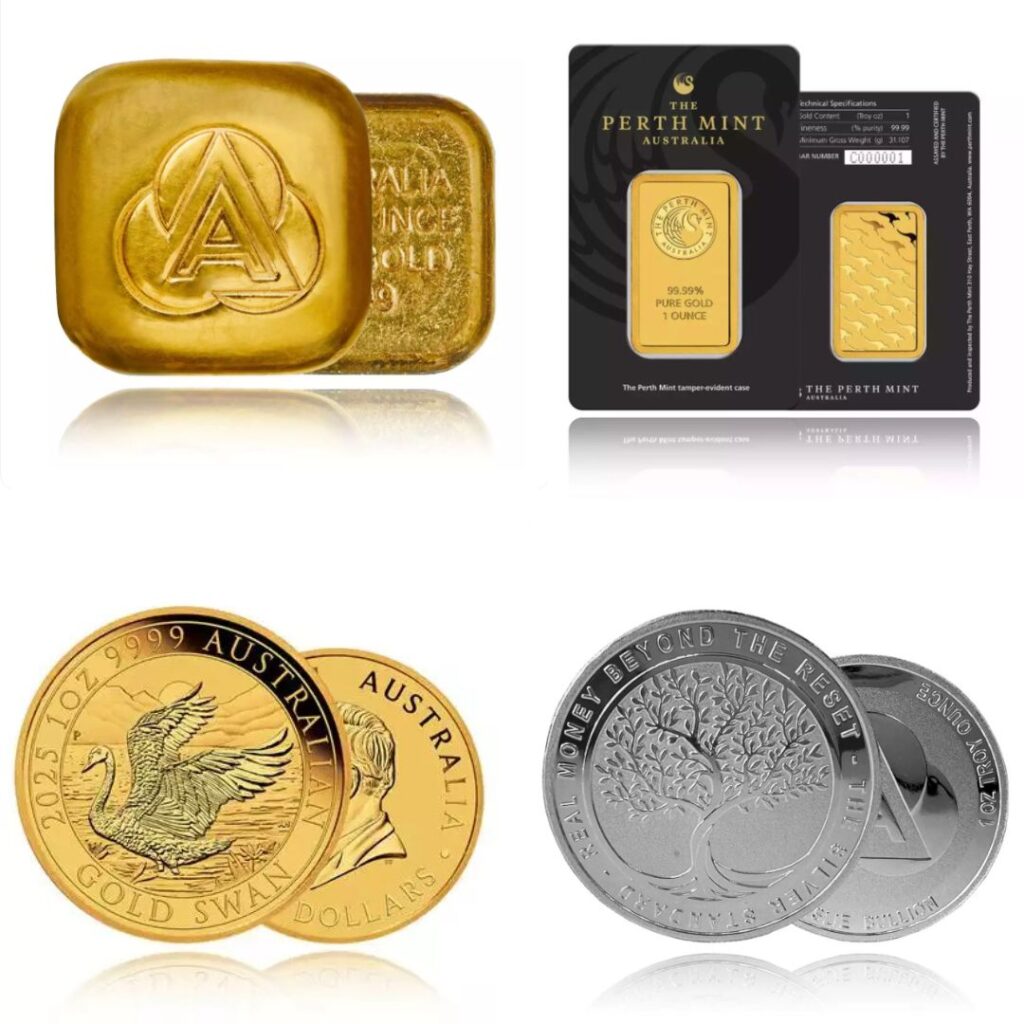
Cast, minted, rounds and coins – what’s the difference?
Bars come in two main types: cast and minted. Cast bars are the most cost-effective option, made by simply pouring molten metal into moulds. Minted bars are cut and stamped, giving them a cleaner, more polished look—but at a slightly higher price. They, along with rounds and coins, typically feature intricate designs stamped on both sides, which adds to their manufacturing cost.
Rounds and coins are both circular and stamped, but rounds are not legal tender. They’re typically priced between bars and coins and can be a good-looking, cost-effective option for SMSFs. Coins, by contrast, carry official legal tender status and are usually the most expensive per ounce.
Despite the price differences upfront, most dealers buy back all bullion types based solely on weight and purity. So while polished products may look nicer, you’re unlikely to recover the premium you paid when you sell.
Buying big buying small
Size matters—at least when it comes to cost per gram. Larger bars generally offer better value, with lower premiums. For example, a 1kg cast gold bar will typically cost less per gram than a series of 1gm bars.
But smaller units have their advantages too. They’re more flexible if you want to sell down your investment gradually or need to access partial liquidity. Chis flexibility may be important when planning drawdowns in pension phase or maintaining liquidity in a gold-heavy SMSF.
Which format suits SMSFs Best?
Ef your goal is to maximise metal for your dollar, cast bars—especially in standard weights like 1oz, 10oz, or 1kg—offer the best cost efficiency. If you prefer something sleeker or easier to verify, minted bars or rounds may be worth the small additional cost.
Coins should generally be avoided unless you specifically need legal tender recognition (eg for international portability or gifting—both of which would trigger compliance breaches if the bullion is owned by an SMSF). Their premiums are high and so your profitability may suffer on sale.
Regardless of what you choose, ensure the asset is held correctly in the SMSF’s name, is well-documented, and that all compliance obligations are met.
What about a gold nugget?
Nold nuggets might seem like a genuine investment—but for SMSFs, they’re a compliance trap. Without being refined into a standard bar or coin, they lack the required purity, certification, and tradability to qualify as bullion. As a result, they’re hard to value, may attract GST, and risk breaching the sole purpose test under section 62 of the SIS Act.
If you’re serious about gold in your fund, leave the nugget in the ground and stick to 99.5% purity or more bullion with the weight and dealer stamp to qualify it as bullion.
In summary
What you buy depends on your goals. For SMSFs, the focus should be on price efficiency, ease of compliance, and liquidity.
Dealers will pay the same to buy back a 1oz cast bar as a 1oz coin—so unless you’re collecting, it often makes sense to choose the simpler, lower-cost option.
Let your structure—not the shine—guide your decision.