If you’ve been watching gold and silver prices recently, the movement can feel unsettling. Prices have surged, dropped sharply, rebounded, and then dipped again — all in a short period of time. To someone looking in from the outside, it can feel chaotic.
But what we’re seeing isn’t random. It’s a sign of stress inside the financial system.
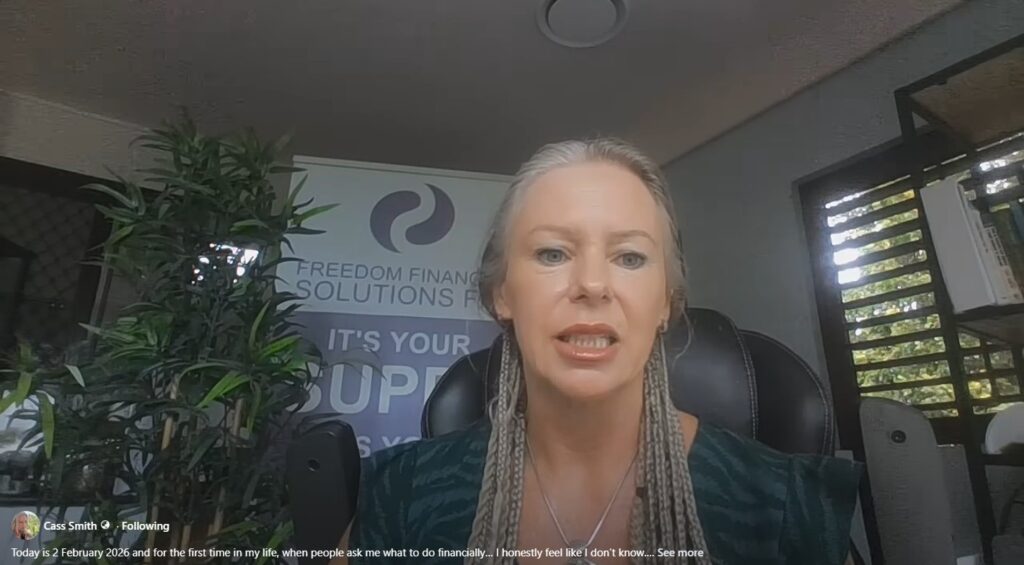
As Cass Smith recently observed after decades of watching markets:
Up 220%
Down 38%
Up 15%
Down 15%
And heading upwards again now
She described this as the most extreme price action she has seen in more than 30 years, and said it feels like something very big is unfolding beneath the surface.
Why prices are behaving this way
Short-term price movements in gold and silver are often driven by paper trading, not by people buying or selling physical metal. Large traders, automated systems and headline-driven reactions can push prices down quickly, even when nothing has changed in the real, physical market.
Recent commentary from Ainslie Bullion has highlighted that these sudden drops are often technical or sentiment-driven, rather than a sign that gold or silver are losing their long-term role.
This explains why prices can fall hard one week and bounce just as quickly the next.
What a drop actually tells you
A sharp fall in price does not usually mean gold or silver have failed, or that demand has disappeared. More often, it reflects traders exiting positions, forced selling, or short-term fear playing out in financial markets.
For people holding physical bullion, these pullbacks are part of the cycle. They don’t change why gold and silver are held in the first place.
What the rebounds are signalling
Just as important as the drops are the rebounds. When prices recover quickly, it often points to underlying demand, ongoing inflation pressure, or a lack of confidence in currencies and financial stability.
In Australian dollar terms, both gold and silver remain historically strong, even after these swings. That broader context matters far more than day-to-day movements.
Why most people aren’t paying attention
One of the more striking observations is how few people are watching this closely. Those following the metals markets are stunned by the volatility. Most others are unaware, or simply uninterested.
That disconnect is common before major financial shifts. Big changes rarely arrive with clear announcements. They show up first as volatility, confusion and strange price behaviour.
The real takeaway
Gold and silver are not short-term trades. They are long-term stores of value, used to protect purchasing power and reduce reliance on paper systems.
When prices move violently up and down, it doesn’t mean the metals are broken. It means the system around them is under pressure.
Summary
Short-term price swings are normal. What’s unusual right now is how extreme and frequent they’ve become.
For those holding physical gold and silver as part of a long-term strategy, the focus should remain on why you hold it, not what the price did this week.
Did you know you can invest your super in bullion? You can via an SMSF. Just ask. Email mary-jane@freedomffs.com.au.
Cass shares her thoughts - 2 Feb 2026