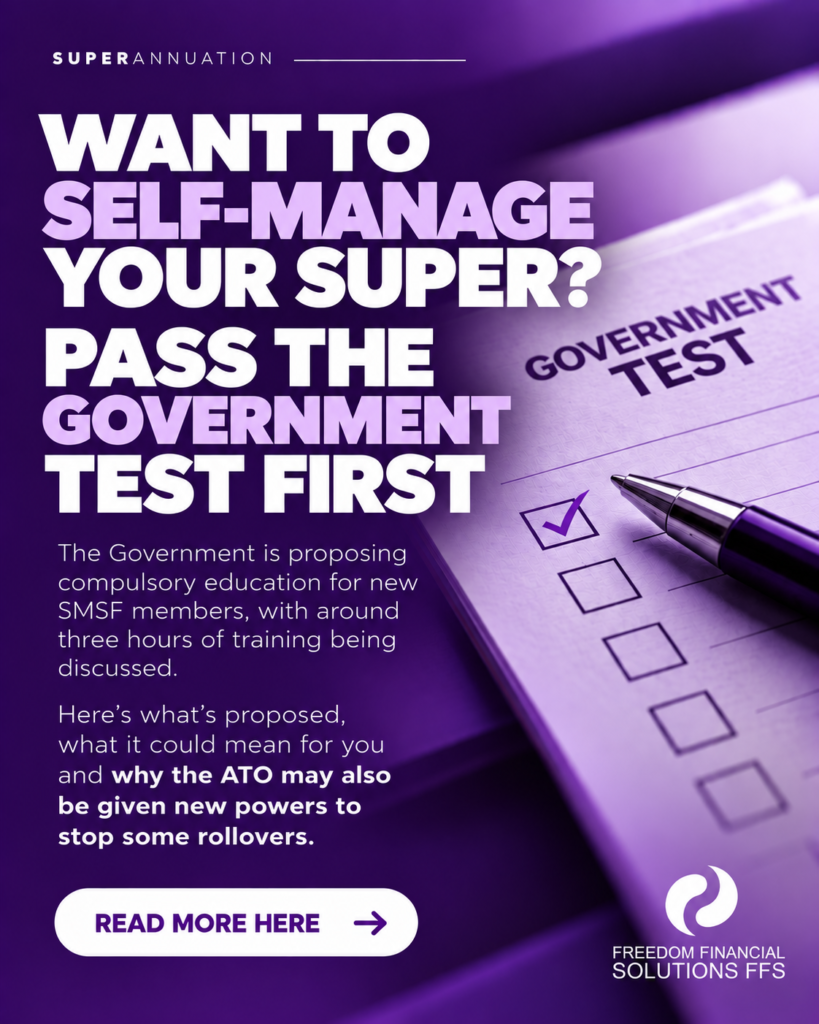
If you want to set up an SMSF in the future, there could soon be another step involved. The Federal Government has announced plans to introduce compulsory education for people establishing new SMSFs, with Treasury’s impact analysis reportedly allowing for around three hours of training for each new SMSF member.
On the surface, that probably sounds reasonable. Running an SMSF comes with responsibilities and people should understand what they’re taking on. Education is a good thing.
The more interesting question is what people are going to be taught, who gets to decide what they need to know and whether education could eventually become another barrier to taking control of their own super.
Three hours. But three hours of what?
The final education program hasn’t been announced, but the ATO already has an SMSF education course consisting of three modules covering setting up, running and winding up an SMSF. Together, they take roughly three hours to complete.
That similarity has caught the attention of the SMSF Association.
CEO Peter Burgess has questioned whether the existing ATO material is really the right model for compulsory education, particularly when you consider who is now establishing SMSFs.
People aged between 35 and 45 are one of the fastest-growing groups entering the SMSF sector. Someone in their 30s considering whether an SMSF is right for them could still be decades away from retirement.
Do they really need to be tested on account-based pensions and exempt current pension income before they’re allowed to establish a fund?
Or would those three hours be better spent teaching them about the decisions they’re actually about to make?
A prospective SMSF member needs to understand what taking control of their super means. They need to know their responsibilities, what an SMSF can and can’t invest in, how the rules apply to assets such as property, shares, bullion or digital assets, what records need to be kept, what it costs to run a fund and where people commonly get themselves into trouble.
They also need to know when they don’t know enough and should get professional help.
That is useful education. Learning detailed pension rules that may not become relevant for another 20 or 30 years is much harder to justify as a prerequisite for establishing an SMSF today.
Who should be doing the teaching?
There is another issue being raised by the SMSF industry: should the ATO be the one teaching prospective SMSF members in the first place?
The ATO has an important role administering and enforcing SMSF tax and regulatory obligations. But educating someone about whether an SMSF is suitable for the way they want to manage their retirement savings is a different job.
The SMSF Association has argued that education should be tailored and relevant, and that suitably qualified industry providers should also be able to deliver any compulsory education rather than the ATO effectively becoming the sole educator.
That could also allow education to evolve with the people actually entering the SMSF system. Someone establishing a fund to invest in direct property may need different information from someone interested in shares, bullion or digital assets. A 60-year-old approaching pension phase may need different education again.
A one-size-fits-all test risks teaching everybody a little bit about everything rather than making sure they understand the things that actually matter to them.
When does education become a barrier?
Burgess has also questioned whether a compulsory three-hour course begins to look like a barrier to entry.
There is an important distinction here. Requiring someone to understand the responsibilities they are accepting is one thing. Requiring them to demonstrate knowledge of parts of the superannuation system that have little relevance to their current circumstances is another.
SMSF members don’t need to know everything they might encounter over the next 30 years on the day their fund is established. They need enough knowledge to make an informed decision, understand the responsibilities they’re accepting and recognise when they need specialist help.
That should be the purpose of education.
Teacher today. Gatekeeper tomorrow?
Compulsory education is only one part of a much broader package of proposed SMSF reforms.
The Government also wants to give the ATO the power to prevent a rollover into an SMSF where there is a well-founded suspicion of consumer harm.
There is a legitimate reason for wanting greater protection. The reforms follow significant consumer losses involving Shield and First Guardian, and nobody wants to see Australians lose their retirement savings through scams, misconduct, conflicted advice or inappropriate investments.
But it does raise a bigger question about the future role of the regulator.
The ATO currently administers the SMSF regulatory framework and monitors compliance. Under the proposed reforms, Government could determine what a prospective SMSF member needs to learn, the ATO could potentially deliver that education, and the ATO could also be given the power to stop that person’s super being transferred into their SMSF.
At what point does the regulator also become the gatekeeper?
Are we fixing the right problem?
The SMSF Association has argued that recent consumer losses shouldn’t simply be treated as a problem with SMSFs themselves. It has pointed instead to issues including inappropriate and conflicted advice, product failures and consumers being directed towards unsuitable investments.
If that’s where the harm occurred, that’s where regulation needs to focus.
Compulsory education could certainly help people recognise risks before transferring their retirement savings. But teaching a 35-year-old the finer points of pension rules isn’t necessarily going to protect them from an unscrupulous promoter or questionable investment. Teaching them how to recognise the risks they’re actually likely to encounter might.
For now, nothing has changed. These are proposed reforms, the final education requirements have not been prescribed and the details of the ATO’s proposed rollover intervention powers are still to be worked through.
But this is becoming about much more than a three-hour course. If the Government determines what prospective SMSF members must learn and gives the ATO greater power over whether their money can be rolled into an SMSF, the question becomes where sensible consumer protection ends and unnecessary gatekeeping begins.
This article contains general information only and does not constitute financial, tax or legal advice. The measures discussed are proposed Government reforms and remain subject to consultation, legislation and change.