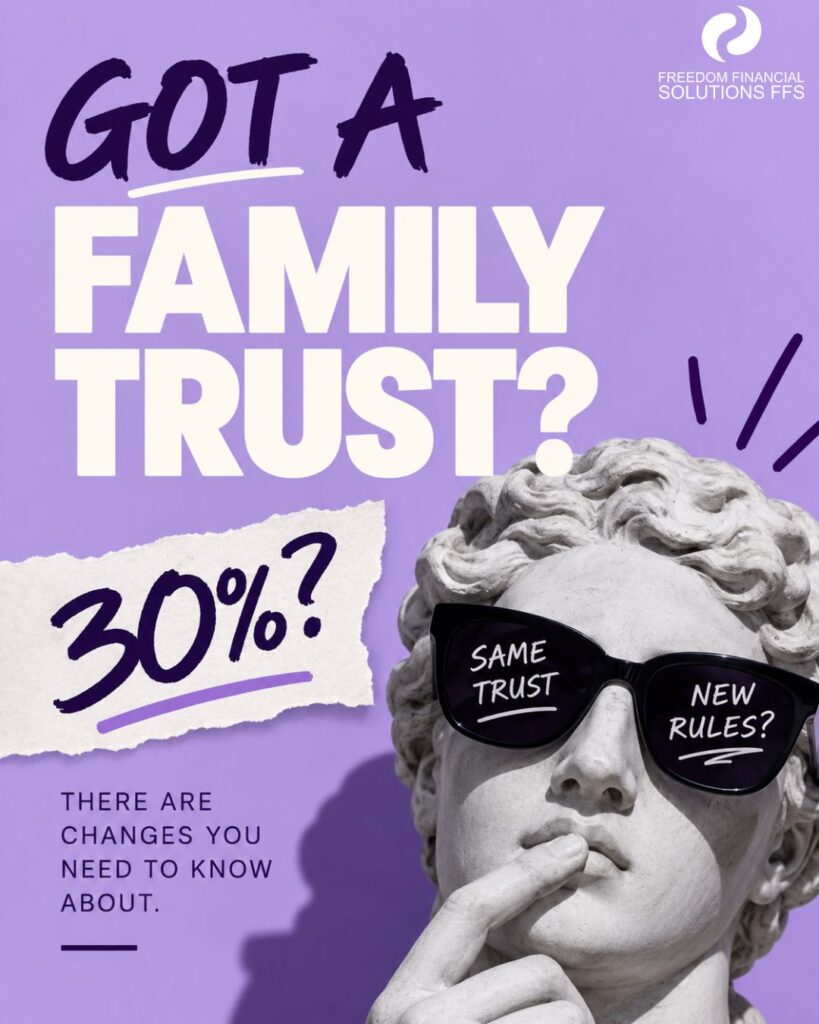
If you have a family trust, you may have seen some fairly alarming headlines recently about a new 30% tax on discretionary trusts.
So, does this mean your family trust is suddenly going to be taxed an extra 30%?
No.
But there are some significant changes being proposed and, if you have a family trust, they are worth knowing about. The Federal Government is proposing a minimum 30% tax on the taxable income of discretionary trusts from 1 July 2028.
The important word here is minimum.
Under the proposed rules, the trustee would pay the tax. Beneficiaries would still include their trust distributions in their own tax returns, with non-corporate beneficiaries generally receiving a non-refundable credit for the tax payable by the trustee.
So this isn’t simply another 30% tax being whacked on top of the tax everyone is already paying.
Why change the rules?
Family trusts have been part of the Australian financial landscape for a very long time.
People use them to run businesses, hold investments, protect assets and help with succession and estate planning. They can also provide flexibility around which beneficiaries receive income from the trust.
It is that last part the Government is particularly interested in.
Because the trustee of a discretionary trust can generally decide which beneficiaries receive distributions, families may be able to distribute income between beneficiaries in a tax-effective way.
The Government’s view is that this can give some people opportunities to reduce the overall tax paid on family income that aren’t available to ordinary wage earners.
Hence the proposed 30% minimum.
Are family trusts finished?
Definitely not. And this is an important point because it is very easy to read a headline about a “30% trust tax” and assume trusts are no longer worthwhile.
Tax is only one reason a trust may exist. A trust may form part of your asset protection, business, investment, succession or estate planning arrangements. Those reasons don’t simply disappear because tax legislation changes.
There are also a number of proposed exclusions from the new rules, including complying superannuation funds, special disability trusts, charitable trusts, deceased estates and genuine discretionary testamentary trusts. Certain primary production income and income relating to vulnerable minors are also proposed to be excluded.
The Government says less than 10% of Australia’s 2.7 million active small businesses will be affected by the reforms in any given year.
Something important changed last week
On 3 September 2026, the Government released the next round of draft legislation.
One of the more interesting additions is an alternative for discretionary trusts that could allow them to elect to make fixed distributions to pre-nominated beneficiaries.
If the requirements are met, the trust could then be exempt from the minimum tax without having to restructure the trust itself.
For people who do want to restructure, the Government is also proposing expanded rollover relief for three years from 1 July 2027.
But before anyone starts changing their trust deed or restructuring anything, remember: these rules are not final yet.
The legislation is still in draft form and consultation is open until 18 September 2026.
There is also a fair bit of time before the proposed 1 July 2028 start date.
What should you do now?
Probably the most important thing is not to panic. Don’t dismantle a family trust because you read that trusts are about to be “taxed at 30%”.
Instead, understand what you have, why you have it and keep an eye on the changes as they develop.
This is also a good reminder that trusts are about much more than tax.
Cass recently recorded a video explaining trusts, what they are and why people use them. If you have a trust, or you’ve never really understood what one does, it’s worth a watch:
Watch Cass talk about trusts here.
We’ll keep following the proposed 30% minimum tax as it makes its way through the legislative process and explain what it means once we know more.
Because rules change. Tax changes. Governments change.
Understanding what you own and how your structures work puts you in a much better position to deal with those changes when they come.
This article contains general information only and does not constitute tax, financial or legal advice. The proposed discretionary trust reforms remain subject to consultation and legislative change. How the rules may apply will depend on individual circumstances. You should obtain appropriate professional advice before making changes to an existing trust or other structure.