In last night’s Federal Budget, the Government sought to deliver a narrative centred around cost-of-living relief, housing initiatives and tax reform aimed at “easing pressure on Australian households and businesses.”
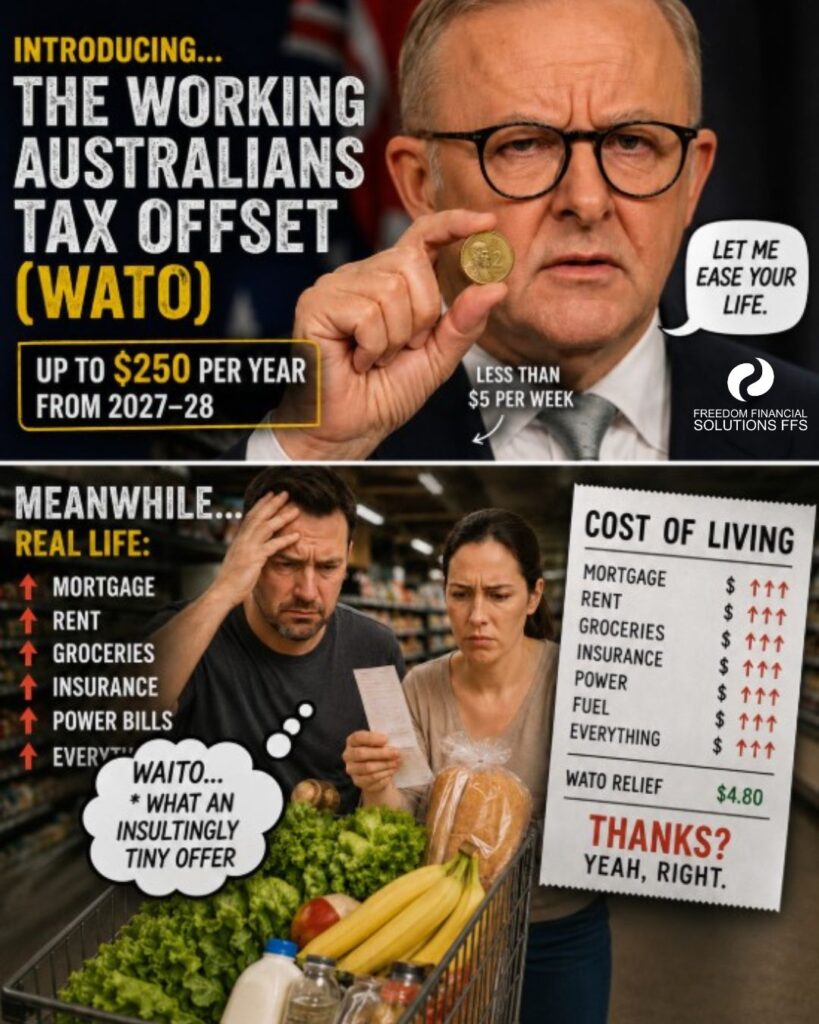
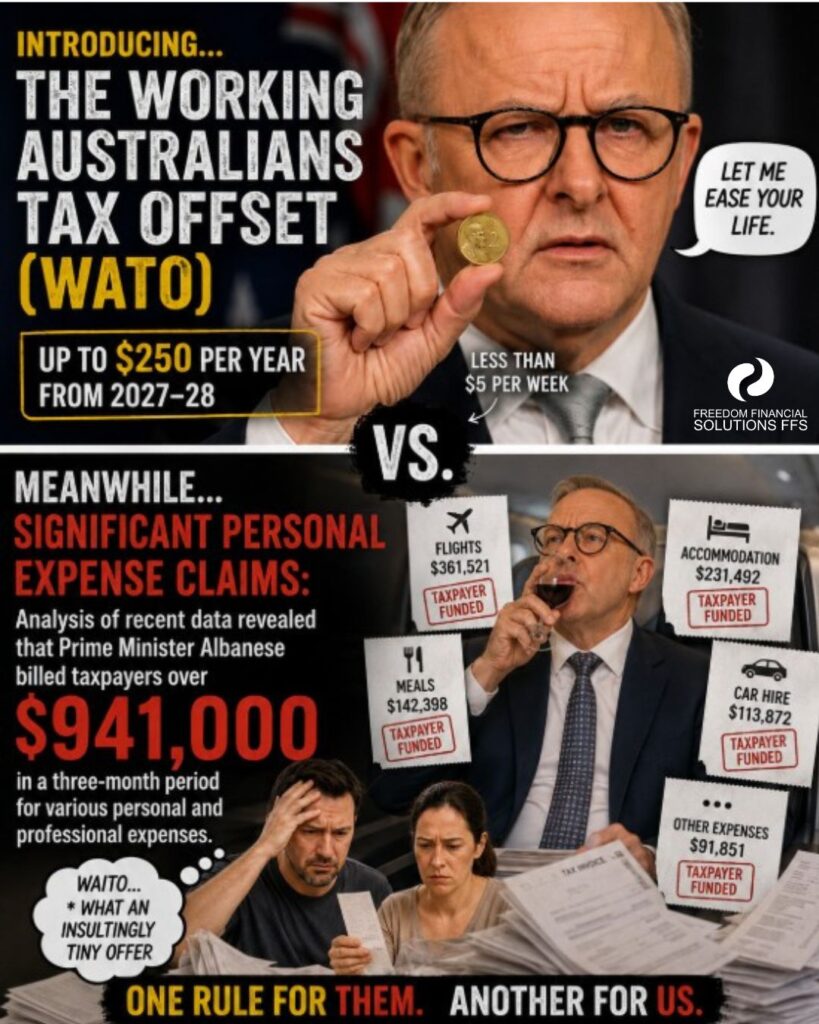
One of the headline “cost-of-living” measures was the introduction of the new Working Australians Tax Offset (WATO), which proposes to provide eligible workers with up to $250 per year from 2027–28.
The reaction from many everyday Australians was swift and overwhelmingly negative, with some rebranding the measure as WAITO — “What an Insultingly Tiny Offer.”
At a time when households are being squeezed by rising mortgage repayments, escalating rents, higher grocery costs, increased insurance premiums and soaring energy prices, a $250 annual offset equates to less than $5 per week.
For families already struggling to stay ahead, this level of support is unlikely to provide any meaningful financial relief. Many Australians may see the measure as disconnected from the economic realities facing working families, business owners and investors — particularly as cost-of-living pressures continue to outpace wage growth.
This sentiment has only been amplified amid ongoing scrutiny of government expenditure and political spending, with reports highlighting quarterly spending figures approaching $941 million.
More significantly, the Budget further reinforced the Government’s proposed move toward a 30% tax rate on earnings attributable to superannuation balances above $3 million — a measure that could have substantial implications for wealth creation, investment structures and long-term retirement planning.
For families, business owners and investors who have spent decades building wealth through superannuation and trust structures, this is far more than a minor policy adjustment. It represents a material shift in how long-term capital growth and retirement savings may be taxed into the future.
Importantly, concerns remain regarding the potential taxation of unrealised gains and the broader precedent this may establish for future taxation policy impacting SMSFs, trusts and intergenerational wealth planning.
We are currently reviewing the finer details of the Budget papers and Treasury announcements to better understand the practical implications for our clients and their financial strategies.
Stay tuned for further insights and analysis on the 2026 Federal Budget.