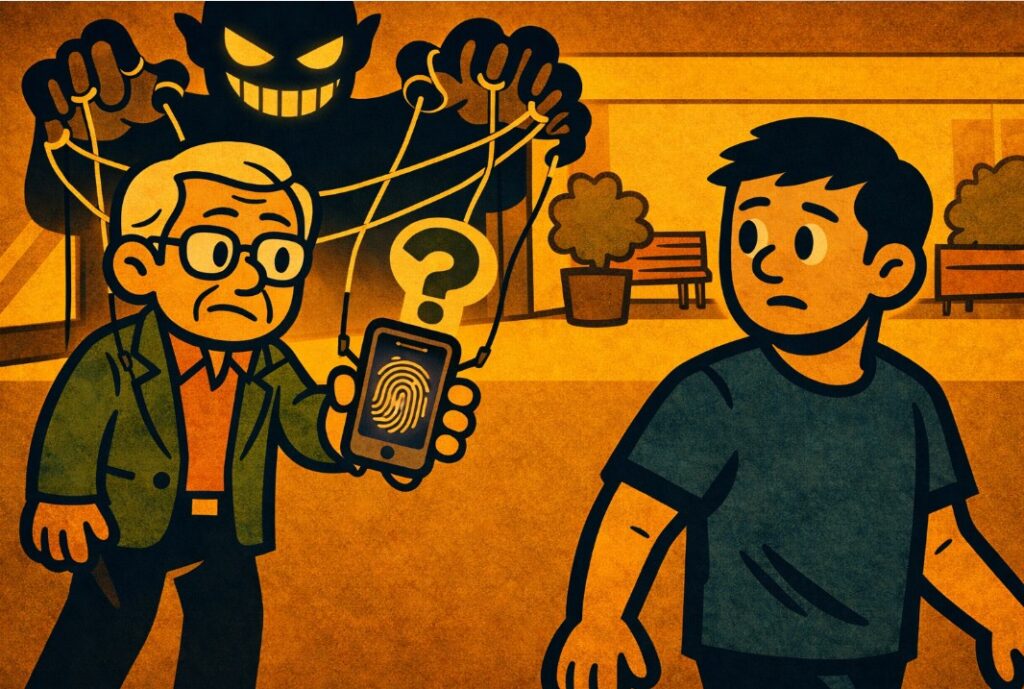
A scam reported internationally relies on something most people find difficult to refuse: helping someone who appears respectable and in need.
The scenario is simple. An older, well-presented person approaches you in public and asks for help with their phone. They might say they cannot work out how to take a photo, send a message, or use an app.
It feels harmless. You take the phone to help.
But the phone may be set up ready to capture biometric data.
When you hold the device, the front camera can record your face, the microphone can capture your voice while you speak, and the screen may prompt you to touch areas that record fingerprints. Some apps can even capture short video clips used for facial mapping. In a matter of seconds, the device may collect enough information to build a digital identity profile.
Why scammers want this
Banks, lenders and financial platforms increasingly rely on biometric verification such as facial recognition, voice authentication and fingerprint verification.
If criminals obtain convincing biometric data, they may attempt to open accounts, apply for loans, or bypass identity checks in your name. Unlike passwords, biometric data cannot simply be changed once it has been captured.
Why this matters
Many Freedom Financial Solutions clients operate SMSFs, companies and family trusts. These structures often involve director registrations with ASIC, bank accounts holding significant balances, and electronic identity verification when opening accounts or applying for financial services.
If someone’s identity is compromised, the consequences can extend well beyond a personal bank account. Criminals may attempt to apply for credit, impersonate directors of companies, or access financial platforms connected to those structures. Protecting your identity is therefore a key part of protecting your financial position.
A simple precaution
If someone asks for help with their phone, the safest approach is to avoid physically handling the device. You can offer verbal guidance instead, or suggest they ask staff from a store that sells or services the device, or ask a friend or family member for help when they return home. This avoids unintentionally exposing your own biometric data, or potentially placing someone else at risk.
Helping others is a natural instinct. Unfortunately, scams increasingly rely on that goodwill. A polite refusal can protect far more than a moment of awkwardness.